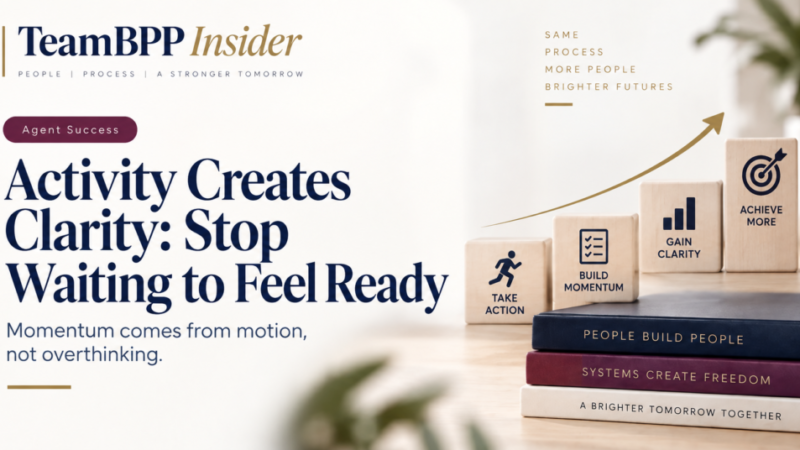
There is a point where more preparation stops helping.
You can rewrite the script again. Watch another training. Organize the CRM. Adjust the list. Think about who to call. Wait for the perfect time.
None of those things produce the information that real activity produces.
Action Gives You Data
Once you start having conversations, you learn what is actually happening.
You learn which opening sounds natural. You learn what questions people ask. You learn where you get nervous. You discover which objections are real and which ones only existed in your imagination.
Activity replaces assumptions with evidence.
Small Daily Standards Matter
A business becomes easier to manage when you know what “enough activity for today” looks like.
That is the value of simple daily standards such as reaching out to a few people, booking appointments, following up with existing clients, reviewing active cases, and documenting the next step.
The exact numbers can vary by role and season. The principle is consistency.
Do Not Judge the Day Only by the Outcome
You cannot control whether every person answers, books, buys, joins, or refers someone.
You can control whether you did the work.
If you only call a day successful when you get an immediate result, you will create an emotional business. One “yes” makes you feel unstoppable. One quiet day makes you question everything.
Track the behaviors that create results over time.
Volume Helps You Become Less Attached
When you only talk to one person, that one conversation can feel enormous. You analyze every word and become overly attached to the outcome.
When you consistently talk to people, one response is simply one data point. You become more relaxed, more curious, and more professional.
Consistency Reveals the Real Problem
If activity is low, the answer may simply be more activity.
If activity is high but appointments are low, the invitation may need work.
If appointments are happening but nobody moves forward, discovery, presentation, fit, or follow-up may need attention.
If clients move forward but cases fall apart, the issue may be affordability, expectation setting, documentation, or case management.
You cannot diagnose the business from feelings. You need enough activity to see the pattern.
Ready Is Not a Feeling
You can prepare responsibly and still feel nervous. That is normal.
Being ready means you know the next step, you have support available, and you are willing to take action while continuing to learn.
Do the work. Review the result. Adjust the skill. Then do the work again.