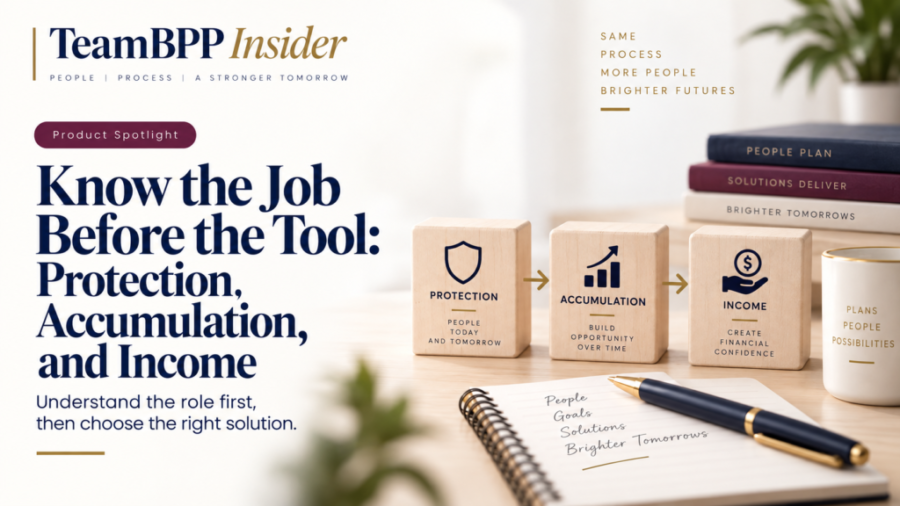
It is easy to fall in love with a financial product.
You learn how an IUL works. You understand the purpose of an indexed annuity. You see how living benefits can help protect a family. You become excited about what the tools can do.
Then a dangerous shortcut appears: you start seeing the product before you see the person.
A Good Product Can Still Be the Wrong Recommendation
Financial tools solve different problems. The fact that a tool has valuable features does not mean it belongs in every household.
Before recommending anything, you need context:
- What is the client trying to accomplish?
- What is their current cash flow?
- What protection already exists?
- What assets and liabilities do they have?
- What is their time horizon?
- How much liquidity do they need?
- What risks are they trying to reduce?
- What other financial priorities are competing for the same dollars?
Without that information, even a technically good product can be poorly placed.
Discovery Is Not a Formality
The Wealth Analysis should not be treated like paperwork you rush through to get to the illustration.
Discovery is where the strategy begins.
Sometimes the client thinks the problem is one thing and the conversation reveals something else. They may ask about retirement but have no emergency reserve. They may want growth but have a major protection gap. They may want a large premium but have cash-flow volatility that makes a smaller commitment more sustainable.
Those details matter.
Recommendations Should Connect Back to the Client’s Words
A recommendation becomes easier to understand when the client can see how it connects to what they told you.
Instead of:
“This is a great policy.”
you can say:
“You told us your priorities were protecting your family, building tax-advantaged supplemental retirement assets, and keeping the contribution at a level you can maintain. That is why we evaluated this structure.”
The conversation is now about their goals, not your enthusiasm.
Do Not Skip Suitability for Speed
Speed feels productive, but bad fit creates problems later: unaffordable premiums, cancellations, chargebacks, disappointed clients, and damaged trust.
A slower, better discovery process can actually create a stronger business because the client understands what they are doing and why.
Education Comes Before Implementation
Clients should understand the role of the tool, important tradeoffs, and what the strategy is designed to do. They should also understand what it does not do.
That does not mean overwhelming them with every technical detail. It means giving them enough information to make an informed decision.
The Product Is a Tool Inside a Strategy
This distinction matters if we want to operate as financial-services professionals.
A professional does not lead with “What can I sell?” A professional asks, “What is happening in this household, what needs attention, and which tools are appropriate for the job?”
Start with the picture. Diagnose the gaps. Then evaluate the tool.