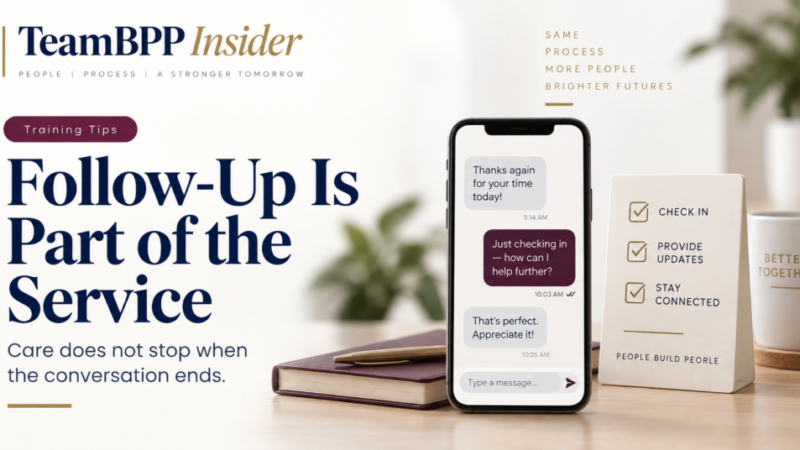
A client can leave a meeting feeling informed, encouraged, and ready to move forward—and still end up doing nothing.
Why? Because nobody clearly owned the next step.
Follow-up is not an administrative task that happens after the “real work.” Follow-up is part of the work.
People Are Busy Even When They Are Interested
A client may genuinely want to gather statements, review a policy, complete an application, schedule a spouse, or send a document. Then life happens.
Work gets busy. Children need attention. Travel comes up. An email gets buried. A document feels harder to find than expected.
A professional follow-up process does not assume silence means disinterest. It helps the client continue the process they already said mattered.
Every Meeting Should End With a Named Next Step
Before the appointment ends, everyone should know what happens next.
That may be:
- Client sends current statements.
- Strategist prepares the recommendation.
- Spouse joins the next conversation.
- A follow-up meeting is scheduled.
- An application is completed.
- Carrier requirements are gathered.
- Policy delivery is scheduled.
- An annual review is placed on the calendar.
“We will follow up” is not a next step. It is a vague intention.
Follow-Up Should Be Specific
A good follow-up reminds the client why the next action matters and makes it easy to complete.
Instead of:
“Just checking in.”
Try:
“I wanted to follow up on the statements we discussed so we can finish your analysis before our next meeting. If you have trouble locating anything, send me what you have and we can work from there.”
Now the message has context, purpose, and a helpful path forward.
Do Not Make the Client Manage Your Process
Clients should not have to remember where their case stands, which document is missing, or whether a carrier requested something.
Your systems should help you track that.
This is where a good CRM, Journey, task system, and case desk become valuable. The technology is not the service by itself. It helps you deliver the service consistently.
Follow-Up Protects Trust
Financial conversations involve personal information and important decisions. When someone shares their goals, concerns, and financial details, they are trusting you to handle the process professionally.
Silence after a great meeting can quickly damage that trust.
Even when there is no major update, communication matters. “We are still waiting on the carrier” is better than making the client wonder whether anything is happening.
There Is a Difference Between Persistence and Pressure
Professional follow-up is respectful. You are helping someone continue a process, not chasing them into a decision.
If a client needs time, acknowledge it. If they decide not to move forward, document it and respect the decision. If they are simply busy, make the next step easier.
The tone matters.
Close the Loop
The client journey does not end at the application. Delivery, beneficiary confirmation, understanding the policy, and annual reviews are part of the relationship too.
A business built only around new applications will always feel like it is starting over. A business built around relationships creates continuity.
Follow-up is where clients learn whether your service is as strong as your presentation.