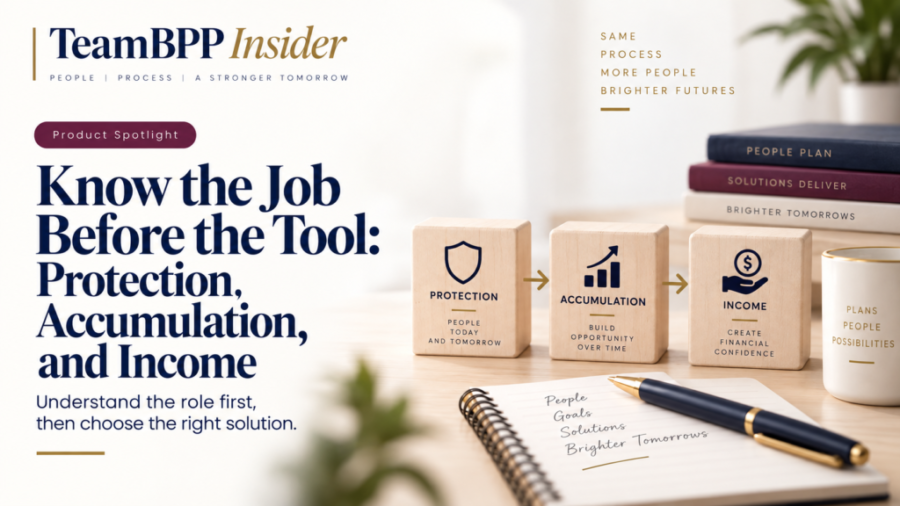
Knowing your product matters. It is not enough.
If we want to operate as true financial-services professionals, we have to understand how the work we do fits into the rest of a client’s financial life.
A household does not experience life in separate industry categories. The same family may be managing a 401(k), mortgage, emergency reserve, life insurance, debt, taxes, college planning, Social Security, estate documents, and retirement income at the same time.
You Do Not Need to Be Every Professional
Understanding adjacent disciplines does not mean practicing outside your license or pretending to be a CPA, attorney, investment adviser, or mortgage professional.
It means knowing enough to recognize when another discipline matters and when the client should coordinate with the appropriate professional.
That is a very different standard from trying to do everything yourself.
Learn the Questions Clients Are Already Facing
Financial education becomes more useful when you understand the surrounding questions:
- How does a workplace retirement plan fit with other savings?
- What happens to retirement assets when someone changes employers?
- How do required minimum distributions affect retirement planning?
- Why do beneficiaries matter on financial accounts and policies?
- How can taxes affect retirement income?
- What role does liquidity play in a long-term strategy?
- How can debt obligations change protection needs?
- When should an attorney be involved in estate planning?
You may not be the person giving every answer. You should understand why the question matters.
Integration Creates Better Discovery
When you understand the broader financial picture, your questions improve.
You stop asking only, “Do you have life insurance?” and start asking how the household is protected, what resources exist, what goals they are funding, and what risks could interrupt the plan.
You stop asking only, “Do you have a 401(k)?” and start asking what retirement income they expect, when they want to retire, and how they think their assets will become income.
Professionalism Includes Knowing Your Boundary
One of the strongest things you can say is:
“That part of the conversation belongs with your tax professional. Let’s make sure the strategy we are discussing is coordinated with them.”
That does not make you look less knowledgeable. It shows that you understand the difference between education, recommendation, and professional scope.
Keep Learning Beyond the License Exam
A license gives you permission to operate within a regulated area. It does not make you finished.
Continue learning about retirement, taxes, Social Security, workplace plans, estate concepts, mortgages, business planning, and the economic environment. Learn enough to have better conversations and make better referrals.
The goal is not to know everything. The goal is to understand how your work connects to the client’s complete financial life.