People sometimes hear the word coachable and think it means obedient, quiet, or afraid to ask questions.
That is not coachability.
Coachability is the ability to receive guidance, apply it, evaluate the result, and improve without making every correction personal.
In business, that is a serious skill.
Experience Shortens the Learning Curve
When you enter a new industry, there are things you simply do not know yet. You may be talented, successful, educated, and highly capable in another area of your life. None of that changes the fact that a new profession has its own language, processes, standards, and patterns.
A coach helps you avoid learning every lesson the expensive way.
If someone has already made hundreds of calls, sat in hundreds of appointments, handled objections, trained teams, and watched cases move through the process, their experience can help you recognize patterns faster.
Ask Questions Without Fighting the Answer
Strong teammates ask questions. The difference is what happens after the question is answered.
If you ask, “What should I say?” and then immediately reject the answer because it feels unfamiliar, you are not really testing the coaching. If you ask, “What should I do next?” but continue doing what you were already doing, the conversation did not change anything.
Coachability requires action.
Correction Is Information
Correction can feel uncomfortable, especially when you care about doing well. But discomfort does not automatically mean something is wrong.
A trainer may tell you that you are talking too much. A leader may point out that you are not asking enough questions. Someone may tell you that your follow-up is inconsistent or that you are explaining products before understanding the client.
That feedback is not a statement about your worth. It is information about your current execution.
The fastest learners know how to separate the two.
Do Not Confuse Personal Style With Changing the Process
You should sound like yourself. You should not become a robot. Your personality, relationships, and communication style matter.
But there is a difference between making the words your own and removing the purpose of the process.
If the goal of a first conversation is to book an appointment, your personal style should still lead toward an appointment. If the purpose of the Wealth Analysis is to understand the complete picture, your personal style should not skip the discovery because you already have a product in mind.
Personalization should improve the system—not erase it.
Give Coaching Enough Repetitions to Work
One attempt is not data.
If you try a script once, feel awkward, and decide it does not work, you may only be measuring unfamiliarity. Skills become natural through repetition.
Use the language. Practice it. Track the result. Bring the result back to your coach. Then adjust.
That loop is how development happens:
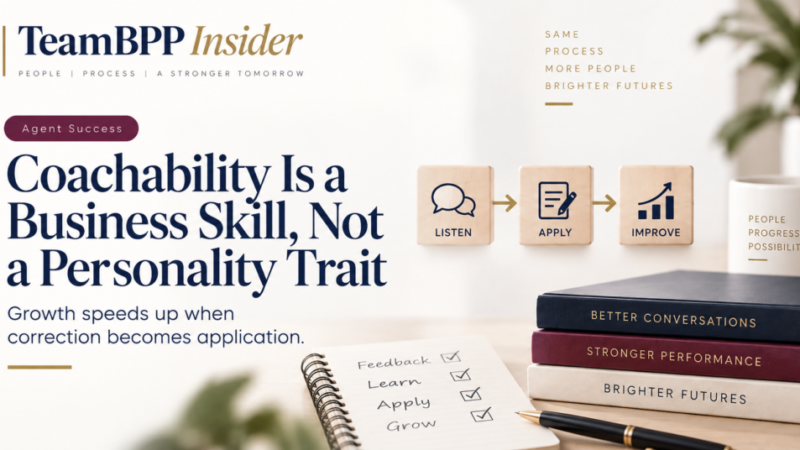
Learn → Apply → Review → Adjust → Repeat.
Future Leaders Need This Skill Too
The irony is that the more leadership responsibility you earn, the more coachable you need to remain. Leaders who stop receiving feedback eventually become difficult to develop and difficult to duplicate.
The goal is not to need coaching forever on every small task. The goal is to develop the humility and self-awareness to keep learning at every level.
Coachability is not weakness. It is the discipline of letting good guidance make you better faster.